
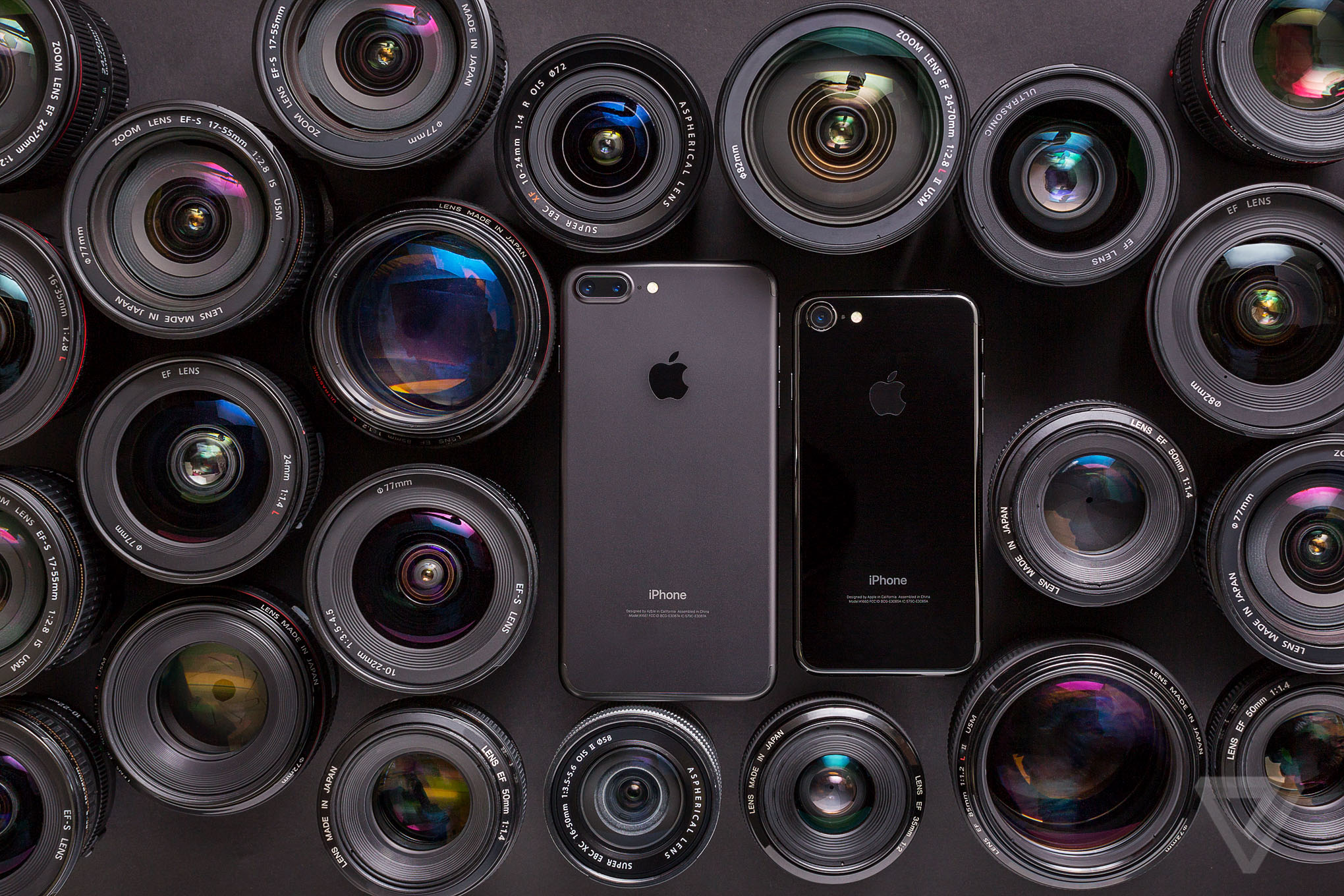
iPhone 7 Review

The future in disguise
By Nilay Patel | Photography by James Bareham
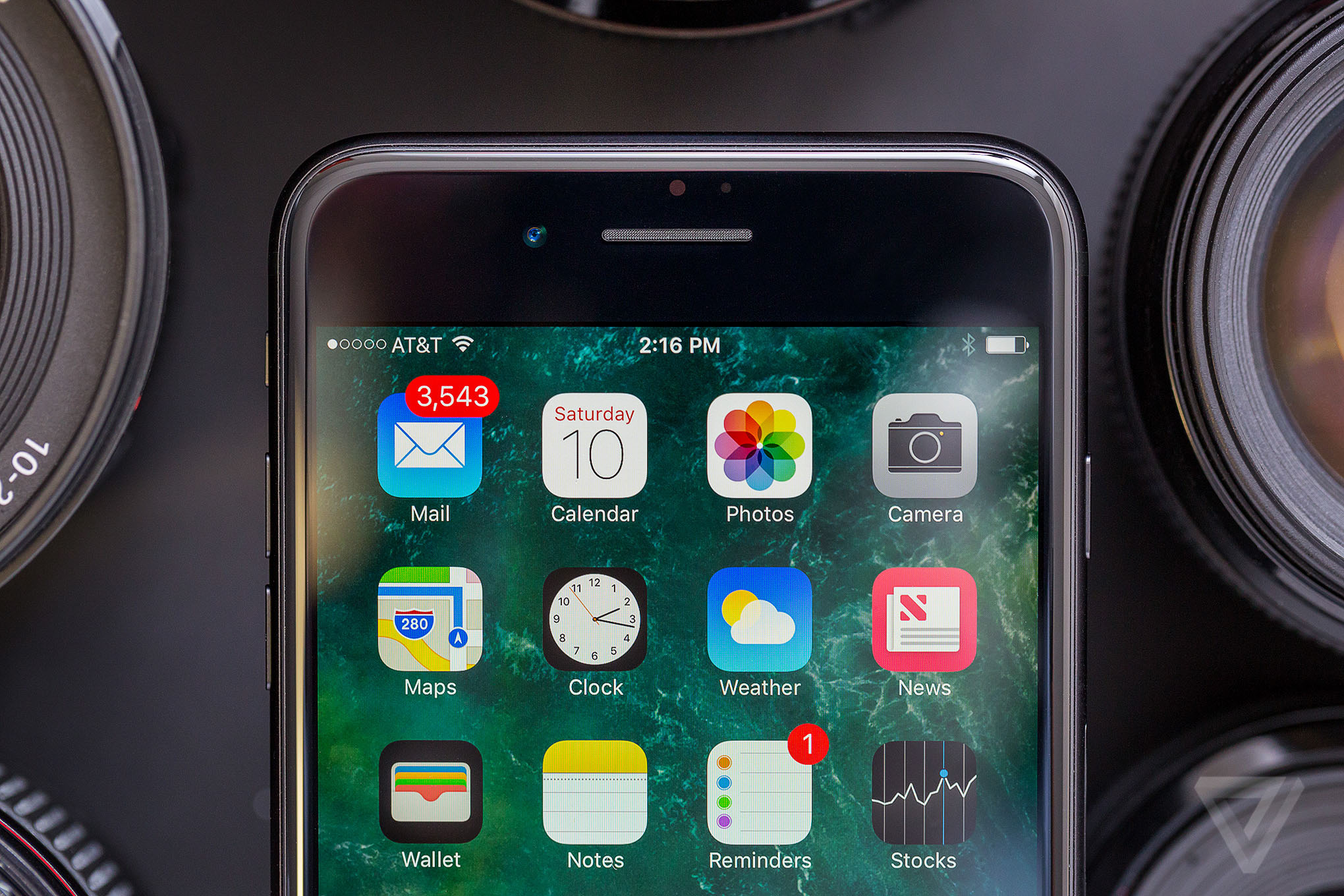
The iPhone 7 and 7 Plus are deeply
unusual devices. They are full of aggressive breaks from convention
while wrapped in cases that look almost exactly like their two direct
predecessors. Even that continuity of design is a break from convention;
after almost a decade of Apple’s steady two-year iPhone update pattern,
merely retaining the same design for a third straight year plays
against expectations.
Inside that case, everything else about the iPhone 7 is a decisive
statement about the future. The dual cameras on the iPhone 7 Plus
promise to usher in a new era in mobile photography. The iconic iPhone
home button is no longer a physical button, but instead a sophisticated
ballet of pressure sensors and haptic vibration motors that simulate the
feel of a button. The new A10 Fusion processor blends two high-power
cores that rival laptop performance with two low-power cores that
combine with a much larger battery to extend run time by up to two
hours.
And, yes, Apple has removed the headphone jack.
Everything else about the iPhone 7 is a decisive statement about the future
Removing the headphone jack is an act of pure confidence from Apple,
which is the only company in tech that can set off a sea changes in the
industry by aggressively dropping various technologies from its
products. Floppy drives, optical drives, its own proprietary 30-pin iPod
connector, flash, even USB — Apple decides that it’s time to move on,
and it has a massive installed base of customers that love and trust the
company who make it happen. And now it’s decided that — yikes — the
headphone jack is over.
After using the iPhone 7 and 7 Plus for about a week, it’s clear to
me that Apple has forceful, but considered opinions about how the next
generation of phones should fit into our lives. But it’s also clear that
the iPhone 7 is a transitional step to that vision of the future, not a
complete expression of it. The question for would-be upgraders is
simple: is all of the latent promise in this phone worth the
inconvenience of that transition?
Design
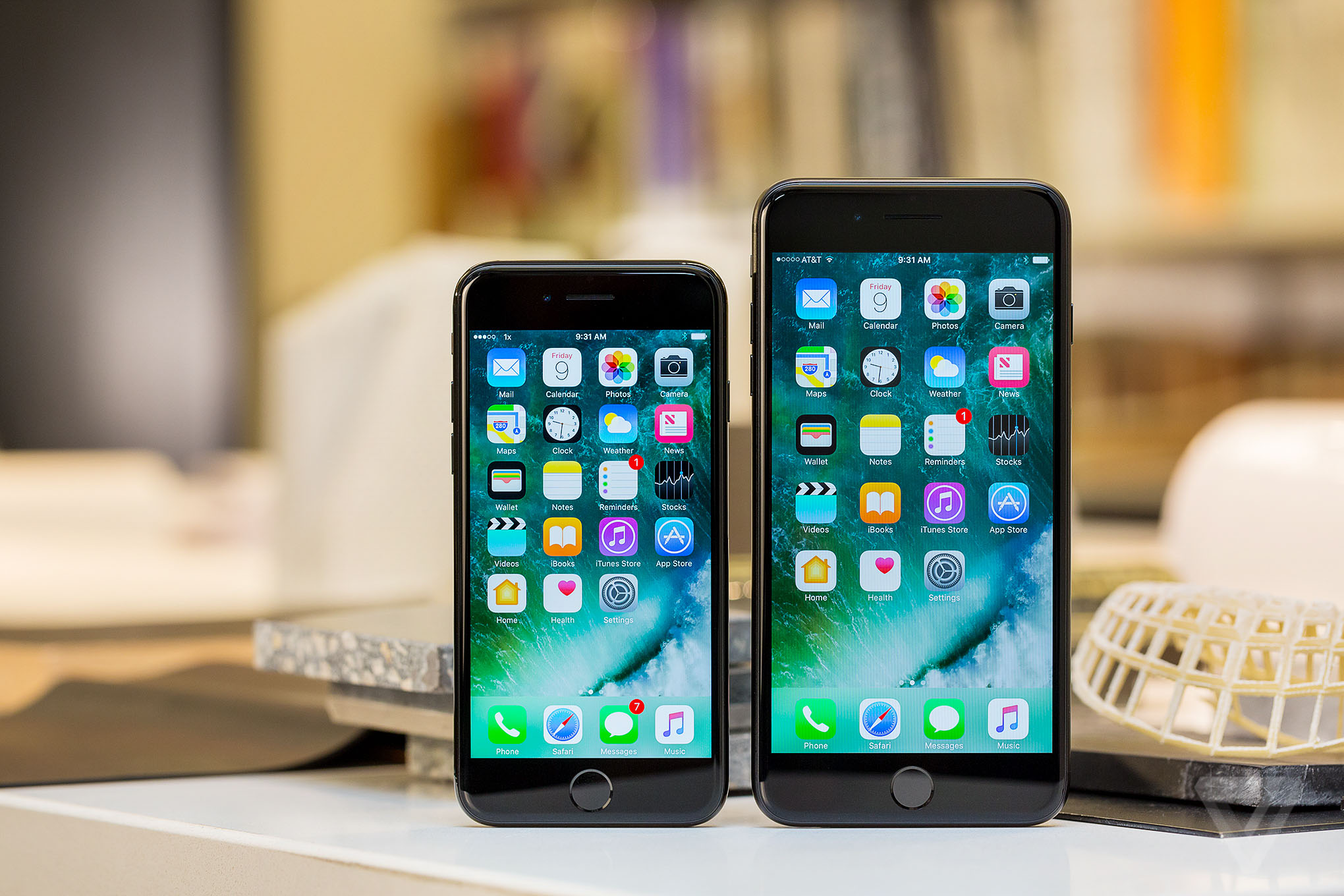
There’s really no getting around it: the
iPhone 7 and 7 Plus look more or less exactly like the iPhone 6 and 6
Plus from 2014. They are now water resistant, which is nice, although
they’re not fully waterproof — keep them submerged in a meter
of water for more than 30 minutes and things might not go your way.
Samsung’s Galaxy S7 and Note 7 are technically even more water
resistant, but I think it’s basically a push — you can get these phones
casually wet now without catastrophe, and that’s a big win. If you want
to go snorkeling with your iPhone, you should probably get a case
anyhow.
Once you put the iPhone 7 in a case, it looks exactly like an iPhone 6
Apart from the water resistance, there are three main external
differences between the 6 and 7: first, the antenna lines on the back
have been tweaked and colored to blend into the body on the matte black
and glossy jet black models, which is a welcome refinement. (The
antennas remain a dull gray color on the silver, gold, and rose gold
variants; Apple says there are limits on what colors can be applied.)
Second, the camera bump has been enlarged and more artfully curved into
the rear casing, which looks particularly handsome on the smaller phone
with a single camera.
And third — here it is again — there’s no headphone jack.
But really, once you put the iPhone 7 in a case, it looks exactly
like an iPhone 6. And if you get a jet black model, you’ll want to get
it into a case immediately — my jet black review unit scratched and
scuffed almost instantly, and the only time it’s remained
fingerprint-free is when we literally handled it with white gloves for
the photo and video shoots accompanying this review. Apple is being
unusually open about the propensity of the jet black finish to scratch,
but beyond that, I’d get the matte black anyway — it just looks meaner.
The iPhone 6 has always been one of the more utilitarian designs in
Apple history, and a smoothed-out camera bump and less visible antennas
don’t really change that. Apple’s competition is getting better at making beautiful phones,
and nothing about the iPhone 7’s design exceeds the rest of the
industry. The iPhone 7 Plus in particular is actually falling behind its
large-screened competition; the 6 Plus was always a bit of a surfboard,
and new devices like the Galaxy Note 7 fit enormous displays into much
smaller, tighter packages. (Too bad about the explosions, though.) This is still a phone that looks best in a case.
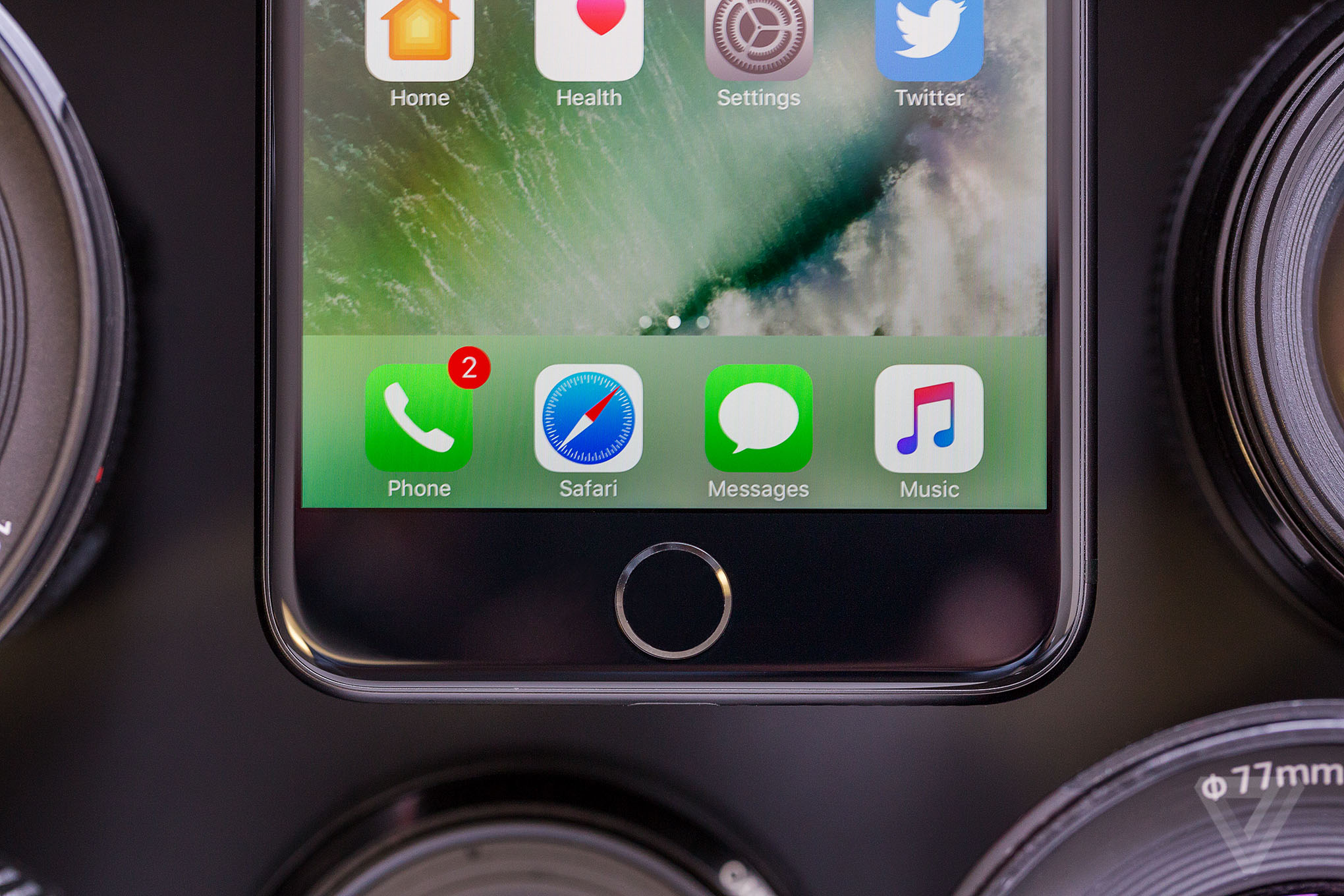
Home button, display, and speakers
The iPhone 7’s new home button will
elicit instant reaction from people; it’s much more different than you
might think. The button no longer moves at all — it’s totally solid,
just like newer MacBook trackpads. A linear vibration unit that Apple
calls the Taptic Engine jolts when you apply pressure to the button,
tricking your brain into feeling a click. It’s nothing like the clumsy
haptic feedback on other phones, which I’ve always disliked — it really
does feel like a click.
This system works tremendously well on MacBooks, but on the iPhone 7
it feels like the entire bottom of the phone is clicking, not like
you’re pushing a button. You can set the haptic feedback to one of three
force settings that make it feel like a harder or stronger click, but
it’s definitely still strange, especially if the phone is lying down on a
table instead of in your hand and you can see that you’re just pushing
against nothing.
It feels like the entire bottom of the phone is clicking
I’m sort of okay with all this, but other people who’ve tried my
review units really don’t like it. There’s something about a really
great button, and the iPhone home button was an all-time great button.
Apple says it switched up the home button to make it more customizable
and more durable — there’s a lot of people with the software button
floating around their iPhone screens — but it’ll take some adjustment to
really get used to. You’ll have to try it to decide for yourself.
The Taptic Engine also adds all sorts of other fun feedback to iOS 10
— when you drop the notification shade down, the phone does a little
bump, for example. It makes it feel like the software on the screen has
real weight and inertia, and I love it. Third-party apps can use the
Taptic Engine as well, and I’m really hoping the industry adds support
faster than the slow, somewhat muted rollout of not-very-useful 3D Touch support.
Taptic Engine feedback is the first really valuable new UI concept I’ve
seen on phones in years, while 3D Touch always seemed like more of a
gimmick. It’s strange that the iPhone 6S won’t get these features even
though it has a Taptic Engine; Apple says the unit in the iPhone 7 has
been revised and made more precise, but it’s still an odd omission.
3D Touch is still present on the iPhone 7’s display, and the display
itself is improved. It’s not as insane as the 2K and 4K OLED panels that
have been popping up on Android phones, but it’s a sharp, bright, and
beautiful LCD, and sharp, bright, beautiful LCDs are very nice to look
at. My review unit is also noticeably warmer than the iPhone 6S display,
which I’ve come to appreciate.
The display can show a wider range of colors now
You won’t notice it in most apps, but the display can show a wider
range of colors now, which is really obvious when you look at photos
taken by the iPhone 7’s camera — which now also captures a wider range
of colors. Photos taken by the iPhone 7 look ridiculously good on the
iPhone 7 display; you can tell the difference between a 7 photo and a 6S
photo on the 7’s screen almost instantly. That’s the only place you’ll
really see the benefit of the new screen for now, but it’s another place
where app developers can really take advantage of powerful new
hardware. Instagram has already announced an update to support wide
color; let’s hope others follow suit.
Apart from the revised camera, the new home button, the screen, and —
heyo! — the headphone jack, the other notable external hardware change
to the iPhone 7 is the addition of stereo speakers. One speaker is at
the bottom of the phone, as it has been, and the other is actually
integrated into the earpiece. They’re much louder than before, and sound
decent, with better treble performance in particular. They’re never
going to replace real speakers, but you can watch a bunch of YouTube
videos or Snapchats and not get annoyed, and conference calls are
dramatically improved.
Okay, I’ve made you wait long enough. Let’s talk about that headphone jack, shall we?
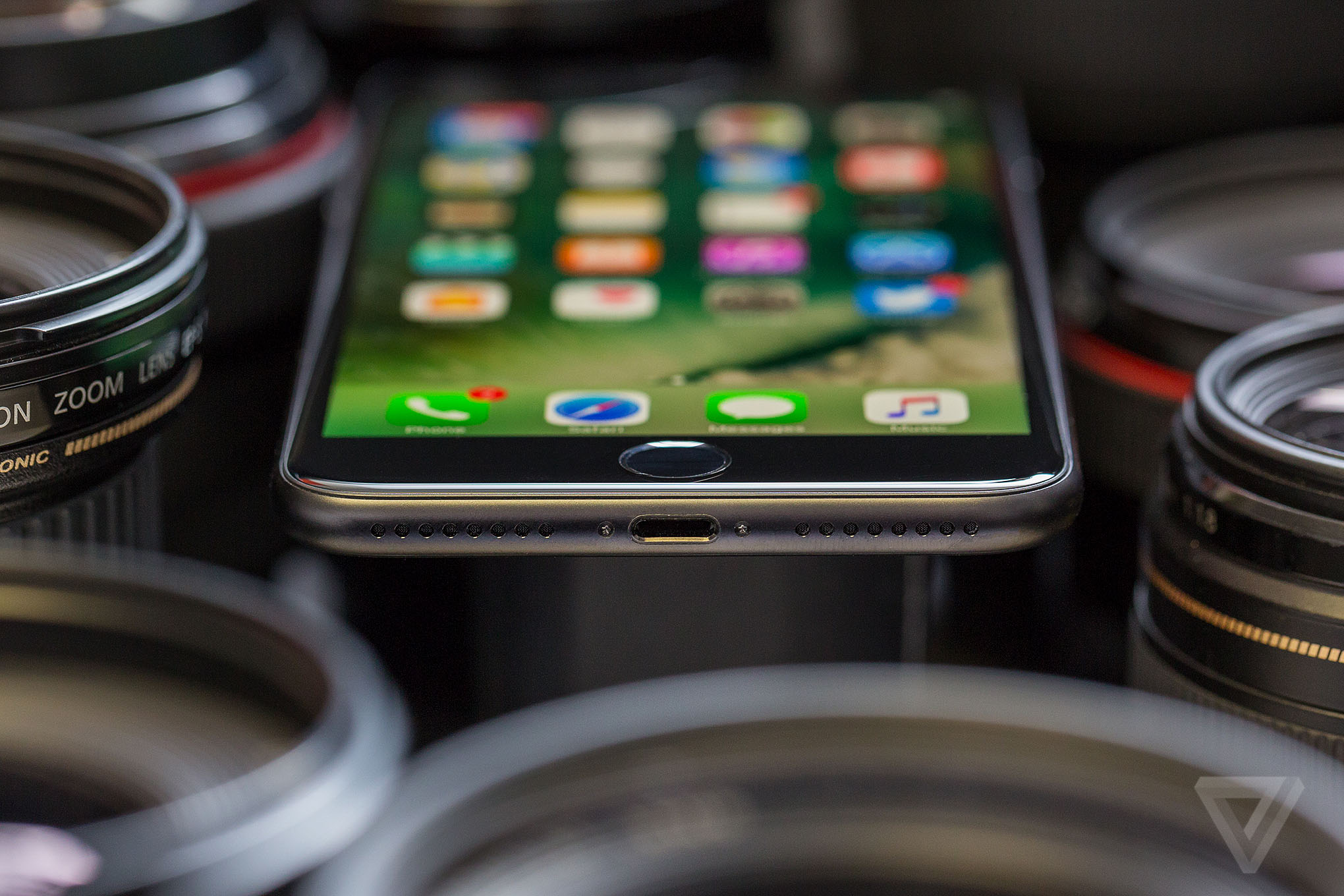
Lightning Strikes
So there’s no headphone jack on the
iPhone 7. Apple says it needed to take out the headphone jack so it
could make space for better cameras, the Taptic Engine (even though the
6S also had a Taptic Engine), and perhaps most importantly, a bigger
battery. It was also easier to make a phone with one less hole in it
water resistant, but Apple tells me that it wasn’t a huge factor.
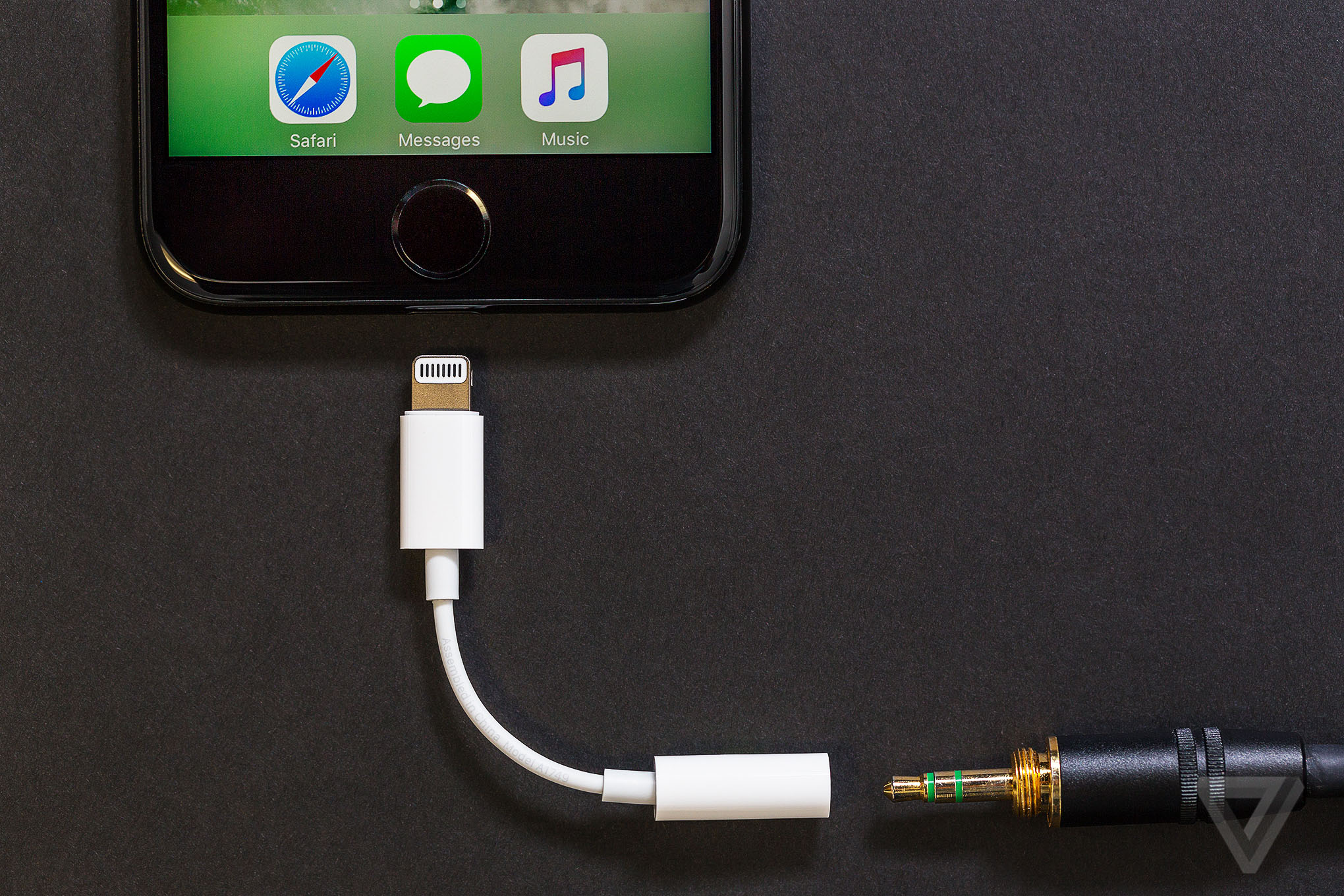
Apple ships a pair of its EarPods headphones with a Lightning
connector in the box, as well as a Lightning-to-3.5mm dongle so you can
use your traditional headphones. You’re not totally out of luck if you
have a big investment in corded headphones, but you’re going to want to
stock up on those adapters if you regularly plug your phone into a car
or have a variety of headphones you like to use — the dongle is small
enough that it’s not obtrusive, but also small enough so that it’s
destined to get lost if you move it around a lot. At $9, the headphone
dongle is the cheapest Apple hardware you can buy; the company thinks
people will just buy a few and keep them permanently attached to older
headphones. And I’m sure third parties will come up with a million other
options, although it’ll be hard to beat $9.
The Lightning EarPods are exactly like Apple’s regular EarPods, which
is to say that they sound average-to-bad and fit either fine or
not-great depending on your ears. Competitors like LG and HTC ship much
higher quality headphones with their flagship phones, and Apple owns
Beats, so it’s just really hard to understand why it’s still shipping
such decidedly mediocre headphones with the iPhone. Especially when the
company is trying to get everyone to be enthusiastic about the move away
from 3.5mm. But here we are.
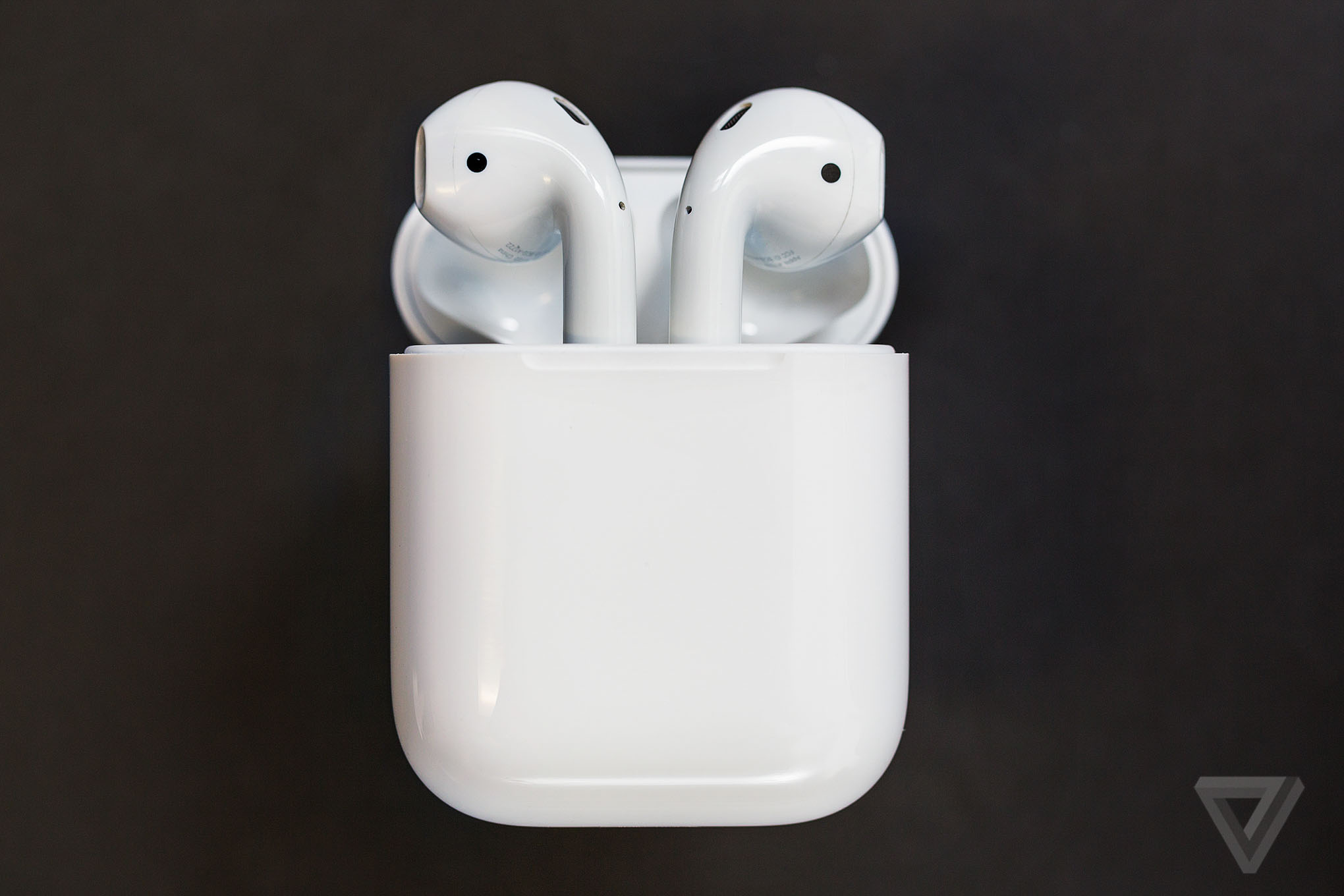
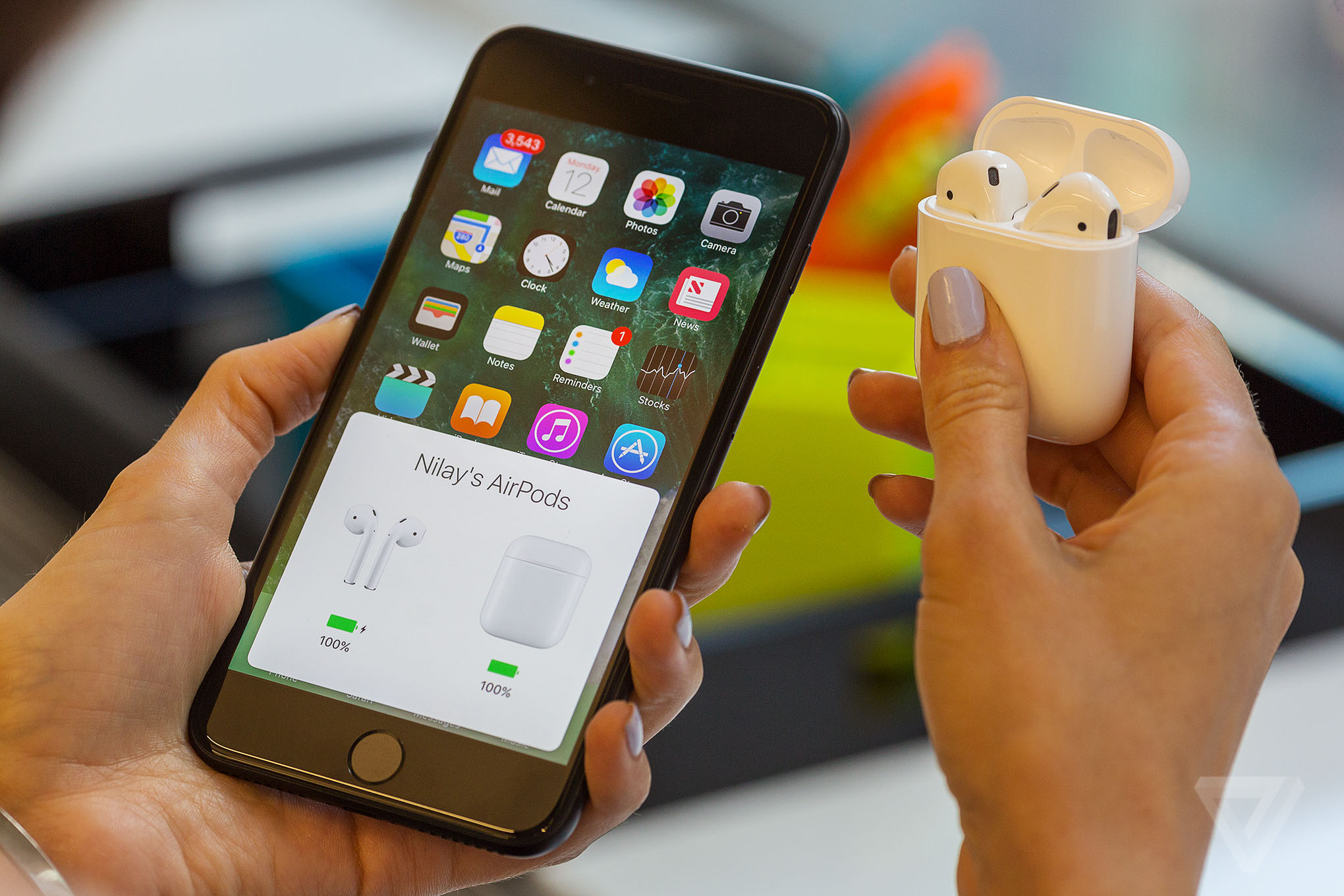
Of course, the real move Apple’s trying to make is to wireless audio,
and the company also gave me a preproduction set of its AirPods
wireless earbuds to try out. I can’t fully review them here since
they’re not final, but they worked well — they’re basically Bluetooth
headphones that pair easier and faster with Apple’s products because of a
proprietary controller chip called the W1 and special software built
into iOS, macOS, and watchOS. Once you pair the AirPods with one Apple
device, they can seamlessly switch to all the others, which is very
cool. But AirPods sound just like EarPods because they’re basically
EarPods without wires, so what you’re getting for your $159 is
convenience and early adopter status, not necessarily sound quality.
I asked Apple if Dr. Dre or Jimmy Iovine consulted on the sound or
design of the AirPods and there was a lot of demurring. I don’t know why
Beats is putting out new wireless headphones that have the W1 chip in
them and Apple is putting out AirPods that sound just like EarPods when
there’s such obvious corporate collaboration opportunity there, but two
of the three new Beats models charge via Micro USB and one charges via
Lightning, so searching for order in this universe remains an entirely
futile exercise.
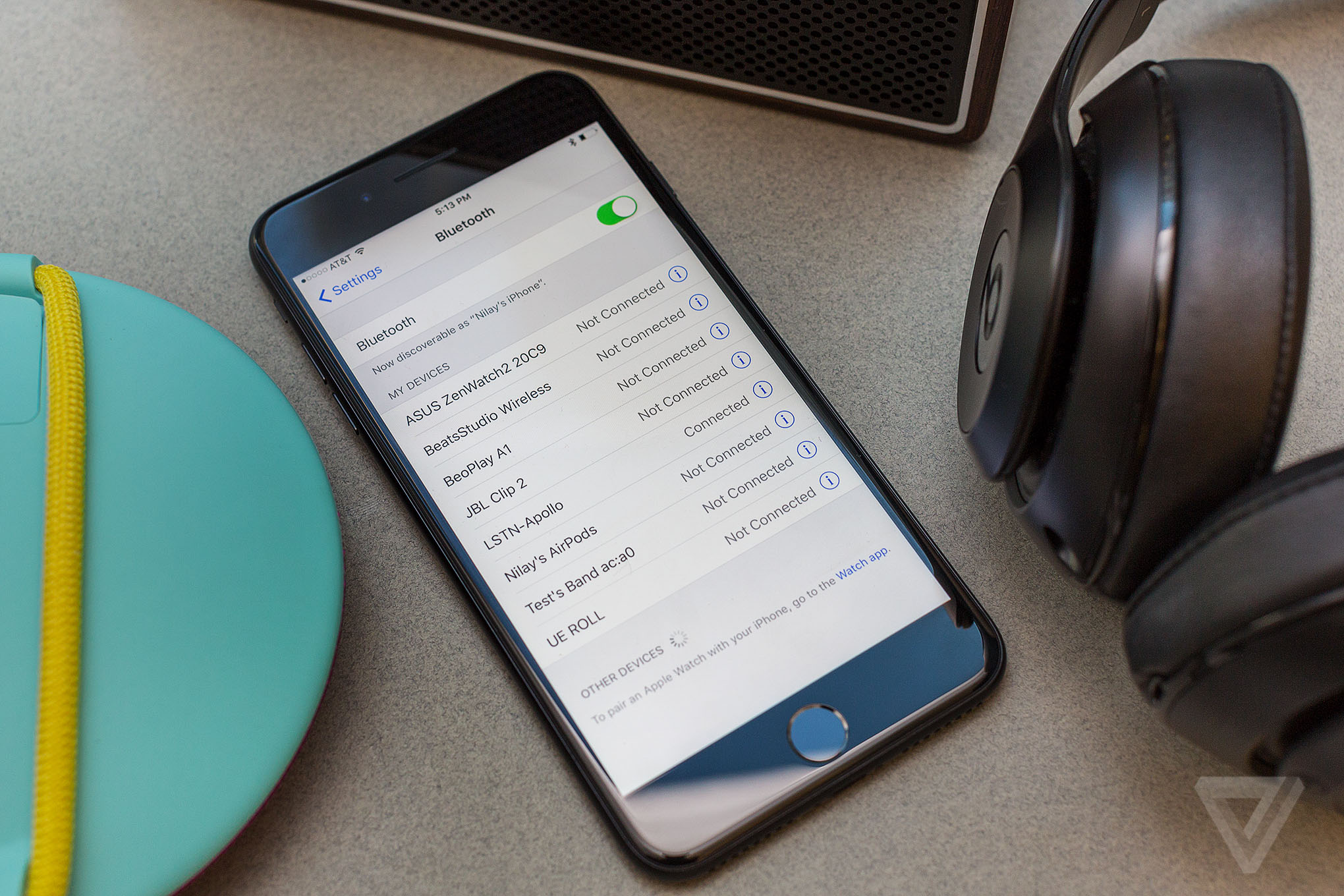
More importantly, it’s disappointing that Apple didn’t put more work
into making wireless audio a better overall experience on the iPhone 7.
The company’s own new W1 headphones get the fancy new pairing support,
but other Bluetooth headphones and speakers still use the same somewhat
flaky Bluetooth setup interface as before. And AirPlay feels all but
abandoned; it was already getting less and less competitive over time,
and the iPhone 7 and iOS 10 don’t seem to offer any noticeable
improvements.
I’ve been spending some serious time really thinking about when and
where I use the headphone jack, and it turns out that I already do much
of my music listening wirelessly: Bluetooth in the car, an Amazon Echo, a
few Sonos speakers, a couple Bluetooth speakers here and there. This is
about as messy and unintuitive as it gets, but it’s not too far off the
mainstream. I could buy a nice set of Bluetooth headphones that also
support corded audio for watching movies on planes and basically be
covered, but I won’t get any of Apple’s improvements to the wireless
experience unless I buy a Beats Solo3 with the W1 in it.
It’s disappointing that Apple didn’t put more work into making wireless audio a better overall experience
That is the definition of ecosystem lock-in, and it’s incredibly frustrating.
Apple took away an established open standard in favor of new
technologies, but instead of making the experience of using those new
technologies better across the board, it made every third-party wireless
audio product a second-class citizen of the Apple ecosystem. If Apple
is serious about wireless audio, it’s going to have to allow other
companies to use the newer, better Bluetooth support in iOS that
enhances its own W1 products, and it’s going to have to make managing
Bluetooth devices a lot nicer than it currently is.
And if Apple is really serious about wireless audio, it will
allow third parties to extend the AirPlay interface just like it allows
third parties to extend Siri and iMessage; an iPhone without a
headphone jack needs to have dead-simple integrations with all kinds of
wireless speaker systems, whether they’re from Sonos or Samsung or
Amazon. To make wireless audio happen, Apple has to do the work of
opening up and making the experience of connecting to any audio system
on the iPhone as simple and frustration-free as pushing a button — as
simple as wired audio has always been. Apple says it hasn’t yet had any
serious conversations about opening or extending its wireless audio
interfaces, but that it’s committed to a wireless world, so let’s hope
the company moves quickly.
It would also be nice if Apple would put out an adapter that lets you
simultaneously charge your phone and listen to music that isn’t the
size of a VGA dongle, because I have no intention of letting this ridiculous Belkin thing
anywhere near my bag. There’s a huge opportunity for third-party
accessory makers to fill all the gaps left by the removal of the
headphone jack, but it’s also clear that the first wave of accessories
is going to be a little clumsy while everyone learns exactly what those
gaps are and how best to fill them. (And if Mophie isn’t working on a
battery case with a headphone jack, customers should start picketing the
company.)
If you squint, it’s possible to see a future iPhone that has no wires
at all — an iPhone that does everything wirelessly, including charging.
But the iPhone 7 is not that iPhone. In fact, right now you need more wires, dongles, and adapters to make it work with the rest of your life
than ever before. I love that stuff — it’s part of the thrill of being
an early adopter. But if you don’t want to devote even a moment’s effort
toward figuring out how to do something as simple as charge your phone
and listen to audio at the same time, it might be worth waiting for
things to settle into place.
Cameras
One of my favorite recurring bits at
iPhone introductions is when Phil Schiller notes, correctly, that the
iPhone camera is likely the best camera most people will ever own. He’s
been saying it fairly regularly since the iPhone 4S came out in 2011,
and he said it again last week when he introduced the iPhone 7 camera.
This is an incredible fact, as is the fact that a huge number of people
now quietly upgrade to a better camera on a fairly regular basis, and
then use the hell out of that camera. The explosion in mobile
photography is one of the most revolutionary aspects of the entire
smartphone revolution, and the general excellence of the iPhone camera
over time is a big reason why.
The iPhone 7 represents another upgrade over the iPhone 6S: there’s a
new, faster f/1.8 lens, the addition of optical image stabilization, a
new four-color True Tone flash, and wider color capture. This all adds
up to a decent improvement, but the iPhone 6S was already operating at
the top of the scale, bested only recently
by the latest cameras in the Galaxy S7 and Note 7. In low light, that
faster lens and optical image stabilization means that the 7
significantly outperforms the 6S. But compared to the iPhone 6S, the
iPhone 7 is a step improvement, not a major leap.
Click on individual images to see full width
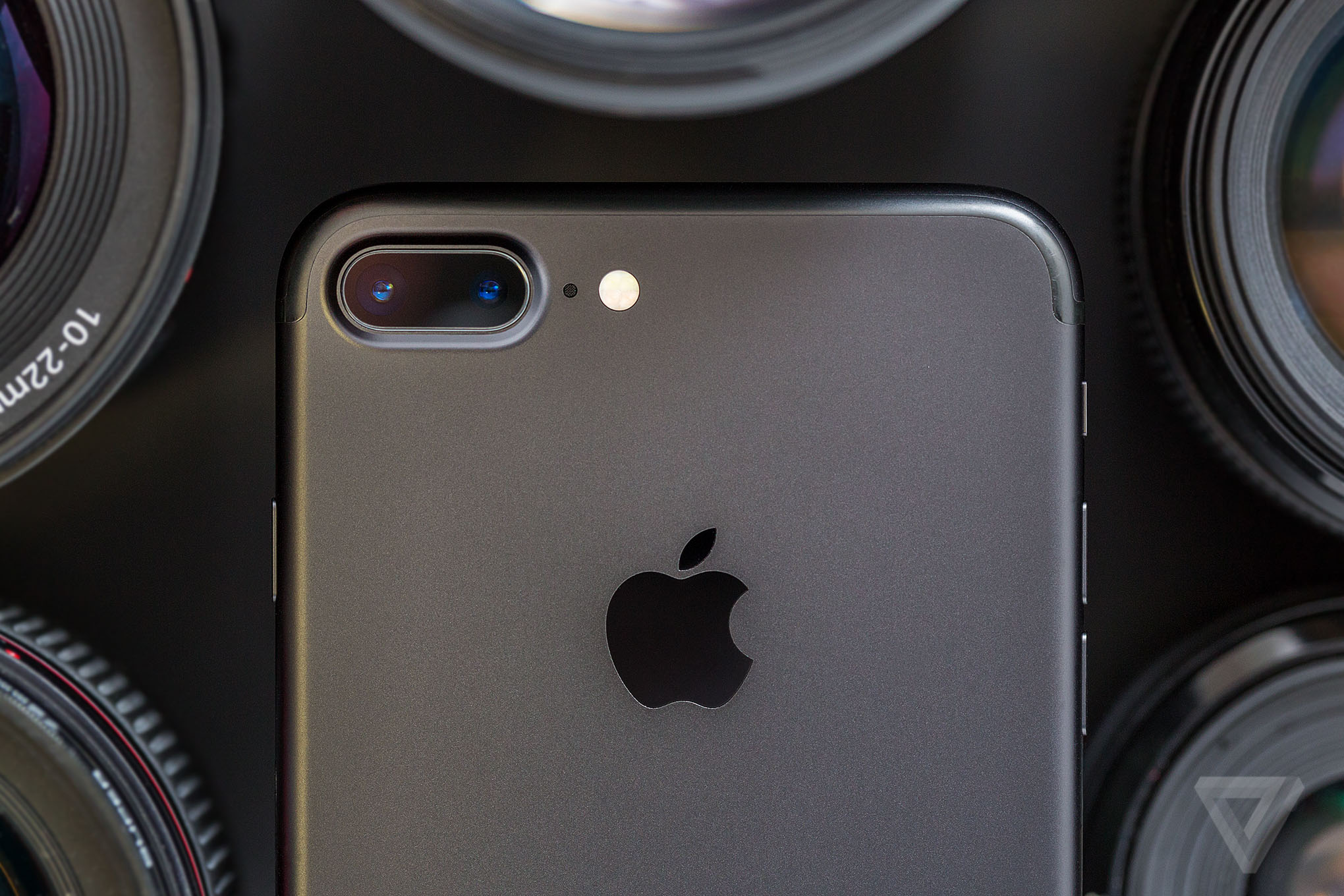
The attempt at a major leap is on the iPhone 7 Plus. Instead of a
single lens and sensor, the 7 Plus has two: the same f/1.8 28mm
wide-angle lens as the iPhone 7, and an f/2.8 56mm telephoto lens. These
cameras operate simultaneously; they’re always working together. Right
now, what this means is that you can switch to a true 2x zoom by tapping
on a button, which is very nice. You can also digitally zoom the 1x
lens to 2x, where the telephoto takes over, and then digitally zoom the
2x lens to 10x. Digital zoom is still digital zoom; anything past 4x
definitely looks like what you’d expect from grainy digital zoom.
And, well, that’s all it really does right now. Zooming is great, but
that’s not the only reason to put dual cameras on a phone. Other phones
with dual cameras, like the Huawei Honor 8, let you do all kinds of
wild focus and depth of field adjustments, and some even let you refocus
the image after the fact, like a Lytro camera. The effects can be a
little fake-looking, but they’re the sort of thing dual cameras enable.
But the iPhone 7 Plus doesn’t do any of that, although a forthcoming
software update will enable a portrait mode that blurs the background
into what looks like a very nice bokeh.
Click on individual images to see full width
Even that is just scratching the surface of what can be done
with two cameras on a phone with as much processing power as the iPhone
7 Plus, and I’m really hoping Apple allows third-party developers to
tap into the system and experiment with possibilities like refocusing
and perspective shifts. But for now, you get zooming. We spent a lot of
time shooting with the 7 Plus, and it gets noticeably warm when you use
the cameras for an extended period; it takes a lot of processing power
to meld those two cameras into a single unit. I’m very curious to see
the impact on heat and battery life when Apple enables features beyond
zooming.
Apple has been blowing up iPhone photos to billboard sizes and
crowing about its cameras for years now, so at this point the
opportunity for improvement is fairly small. I took a few photos with
the iPhone 7 Plus and the iPhone 6S Plus under decent light and asked
people to tell them apart on a laptop screen. It was pretty hard for
most everyone, although the 7 definitely has more vibrant colors and a
noticeably shallower depth of field because of the brighter lens. You
can tell if you know what to look for, but the difference in most shots
will be imperceptible in an Instagram or Facebook feed.
Click on individual images to see full width
Front cameras are almost more important than rear cameras
in our Instagram Stories world, and the iPhone 7’s front camera is
excellent, with a new 7-megapixel sensor replacing the 5-megapixel unit
in the 6S. The lens is not quite as wide angle as Samsung’s cameras, but
it’s bright, sharp, and the Retina Flash is still a terrific idea that
was absolutely worth lifting from Snapchat. It's a solid improvement,
and a welcome one.
We conducted some pretty extensive camera testing against a Samsung
Galaxy Note 7, an iPhone 6S Plus, a Fuji XT10, and a Canon 5D MkIII —
you can see the results for yourself. The iPhone 7 and 7 Plus clearly
hold their own, but I don’t think they blow the pack away. That might
all change when Apple starts taking more advantage of the dual cameras,
but for now, I don’t think the 7 Plus will keep anyone away from a
mirrorless rig. Which is exactly what I said about the iPhone 6S last
year.
Performance
The iPhone 7 has the new A10 Fusion
chip, another product from Apple’s industry-leading chip design team.
It’s a new design with four cores: two high performance cores, and two
low-power cores that use less battery power during everyday tasks.
It’s lightning-fast, of course, with early benchmarks indicating that
the A10 Fusion is faster than even the A9X in the iPad Pro. But In my
super boring day-to-day Twitter / Facebook / Gmail / Slack / Safari
usage, the iPhone 7 Plus wasn’t really all that much faster than the A9
chip in the iPhone 6S Plus — likely because I wasn’t pushing the
processor enough to use the high-performance cores. It’s impressive that
Apple was able to create a more efficient processor that delivers the
same perceived performance as the previous generation while using less
power, but that also means that in everyday use I didn’t see anything
like the performance leaps that were so noticeable in previous iPhone
updates.
Still, faster is better, and once app developers start targeting the
A10 Fusion, we might see a new wave of apps that harness its raw power.
But that’s a familiar waiting game we’ve been playing with ever-faster
iOS devices for years now.
Apple claims that a combination of a larger battery that fills some
of the space formerly used by the headphone jack, the more efficient
processor, and iOS 10 improvements allows the iPhone 7 to run for two
more hours than the iPhone 6S, and the 7 Plus to go for an hour longer
than the 6S Plus. That was mostly borne out in my day-to-day testing,
which saw the smaller phone run for about 10 hours of medium usage and
the larger iPhone 7 Plus go for about 12 hours. Under a heavier load, I
get the sense that battery life will be more like the 6S models, but
those extra hours will be meaningful for those desperate moments on the
way home from work.
iOS 10
Speaking of iOS 10, it’s wonderful.
Seriously, it’s the nicest iOS update in a long time, with a clear sense
of how you should flow between operations and a much more inviting
visual design. We’ll have much more about iOS 10 in a forthcoming
review, but know that it has a slick new version of iMessage with all
kinds of new features, a new version of Siri that can be extended by
third-party apps, better integration with smart home devices, a
much-improved Control Center, better Music and News apps, and a ton of
other new features.
(As an aside: my personal favorite iOS 10 tweak is that Apple has
gotten rid of slide-to-unlock because the Touch ID sensor on the 6S and 7
is so fast — sliding to the right from the lock screen now brings you
to a widget screen. You unlock the phone just by pressing the home
button, which is enough time for Touch ID to recognize your fingerprint.
Apple’s slide-to-unlock patent was at the center of many of their
lawsuits against Android phone makers, and I once made an entire video
exploring how Android phones were carefully designed around that
patent. And now it’s gone, because Apple figured out a better idea
that’s genuinely useful.)
Conclusion
Down to brass tacks: do all of the new
features of the iPhone 7 make up for the inconvenience of the missing
headphone jack? This may or may not surprise you, but I don’t think so —
not yet.
The iPhone 7 and 7 Plus are legitimately among the most interesting,
opinionated, powerful phones Apple has ever shipped, and the most
confident expressions of the company’s vision in a long time. iOS 10 is
excellent, the cameras are better, and the performance is phenomenal.
And the batteries last longer. These are terrific phones.
These are terrific phones
But they are also incomplete. The most interesting feature of the
iPhone 7 Plus’ new dual camera isn’t shipping at launch. Apple’s making a
big bet on iMessage and Siri apps in iOS 10 but it hasn’t paid off yet.
Apps haven’t been updated to use the Taptic Engine or the new wide
color gamut display. The entire ecosystem of new headphones and adapters
required to make use of Lightning and wireless audio is just getting
off the ground. Only Apple or Beats headphones offer the best wireless
audio experience, and you might not like how they sound or fit. By the
time developers even come close to hitting the performance limits of the
A10 Fusion chip, Apple will be shipping the A11 Fusion Pro with six
blades.
The entire time I was using the iPhone 7, I felt like I had a
prototype of next year’s rumored drastic iPhone redesign disguised as an
iPhone 6. All those bold bets on the future are legitimately exciting,
but here in the present using the iPhone 7 in a case feels a lot like
using a iPhone 6S with a weirder home button and more adapters.
But they are also incomplete
If you need a new phone right now, sure, buy an iPhone 7. The little
one starts at $649 for a mercifully doubled 32GB of storage and ranges
up to $849 for 256GB, and the Plus starts at $769 for 32GB and goes up
to $969 for 256GB. Make sure you factor in the extra cost of headphone
adapters or Bluetooth headphones, because you’ll end up needing them.
You’ll be fine, and your photos will be better.
But unless you’re eager and ready to live the early adopter life, you
won’t actually be missing out on much if you don’t get an iPhone 7.
This is an iPhone that lays a marker in tech history, and it will serve
as the foundation for many important changes to how phones work and
integrate into our lives. We’re going to remember the iPhone 7.
It’s going to be the next iPhones that actually build a useful future on that foundation.
iPhone 7 and 7 Plus
Good Stuff
- Water resistance
- Improved cameras
- Better battery life
- Great display
- Taptic engine feedback is neat
- Dual camera zoom on the 7 Plus is great
Bad Stuff
- Lack of headphone jack is inconvenient
- Jet Black model scratches easily
- Looks just like an iPhone 6 in a case
- Wireless audio ecosystem is immature
- #donglelife
- iPhone 7 Plus design feels big compared to competition
- Other iPhone 7 Plus dual camera features haven't shipped yet


No comments:
Post a Comment